
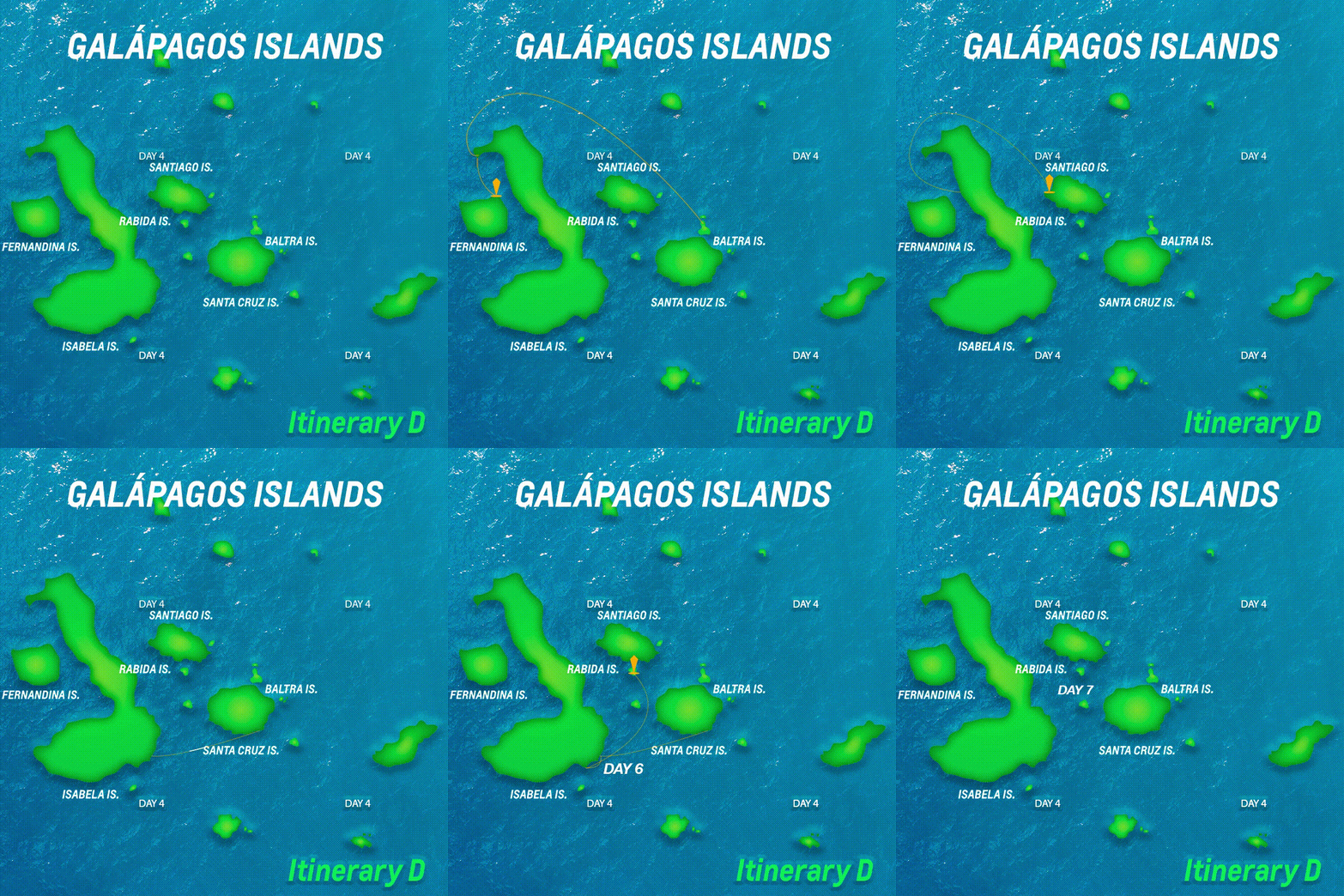
FRIDAY to FRIDAY – 8D/7N
Daily Activities
Click each day to display the information
Fri.:
BALTRA – MOSQUERA
AM
Depart from Guayaquil to Galápagos (1½ hours of flight time).
 BALTRA ISLAND: This island was a strategic point during the Second World War. It is the main airport for the Galapagos Islands where tourists and colonists arrive and depart. At the Arrival at Baltra Airport, our naturalist English speaking guide will assists you. Transfer to the yacht. Welcome and briefing.
PM
 MOSQUERA: After lunch, disembarkation at Mosquera Island (wet landing) located between North Seymour and Baltra. The island consists is a long narrow stretch of white sand, rocks, and tide pools. Created by Geological uplift the island has a flat look to it rather than the conical shape of the volcanically formed islands. It is a great place for snorkeling, strolling on the beach, and enjoying the animal life without the tourist crowds common at many of the more popular islands.. This islet is actually home to a huge population of sea lions and is also home to many shorebirds. Briefing and dinner on board.
Satur.:
ISABELA ISLAND – FERNANDINA ISLAND
AM
 VICENTE ROCA POINT (ISABELA ISLAND): After breakfast, panga ride visit to Vicente Roca Point. Comprised of two separate coves, this site is a large bay with spectacular sea life, observing seahorses, sea turtles, rays, puffer fish, the strange yet fascinating Mola-mola (or sunfish), we see also penguins, blue-footed boobies and nazca boobies. Lunch on board.
PM
 ESPINOZA POINT (FERNANDINA ISLAND): In the afternoon disembarkation (dry landing). Walk (600m. round trip, 1½h, flat, sandy and rocky path) to see lava flows, a colony of marine iguanas (nesting time: January to June), penguins, pelicans and colonies of cormorants, lava cactus. Time for snorkeling. Briefing and dinner on board.
Sun.:
ISABELA ISLAND
AM
- URBINA BAY (ISABELA ISLAND): LAfter breakfast, disembarkation at Urbina Bay (wet landing), located in the west of Isabela Island, at the food of the Alcedo volcano. Walk on a sandy and rocky defined path (1 km. round trip. 2h, flat), observing calcareous organisms (shells, corals) exposed above water. In this area we see a large colony of land iguanas, Darwin's finches, giant tortoises (between June – September) and flightless cormorants. After the hike, time for snorkeling along the shoreline where guests may observe penguins and flightless cormorants.
PM
- TAGUS COVE (ISABELA ISLAND): After lunch visit to Tagus Cove that was a port where whaling ships arrived and left their ships’ names in a cave in 1800. In the high part is the Darwin Lake, a round salt water crater. Disembark (dry landing). Walk begins from the shore by a wooden stairway that rises to the dusty trail passing through Palo Santo Forest to reach the Darwin Lake. Continue on the trail around the lake through the dry vegetation zone. Panoramic views to the Darwin and Wolf volcanoes. (2kms round trip, 2h / starts at 0m, ascending to 50mts). Later, panga ride through the cliffs to observe the historical graffiti, penguins, flightless cormorants, boobies, pelicans and Sally Lightfoot crabs. Snorkeling time in the cove. Briefing and dinner on board.
Mon.:
SANTIAGO ISLAND
AM
 EGAS PORT:Breakfast. The visit to Puerto Egas begins with a wet landing on the dark sand beach of James Bay. Walk along a rocky trail to the salt crater (1.7km. round trip, 1½ h, start at 0m, ascend 30m), observing Darwin Finches, the endemic Galapagos hawks, marine iguanas, sally light root crabs and fur seals and sea lions. Time for swimming and snorkeling.
PM

ESPUMILLA BEACH: Discover one of Santiago Island’s most beautiful and untouched beaches, known for its distinctive reddish sand and tranquil setting. Walk through mangroves and Palo Santo forest—an essential ecosystem in the island’s natural regeneration. This site also serves as a seasonal nesting area for green sea turtles.
Along the shore and inland, you may spot marine iguanas, pelicans, herons, Darwin’s finches, and other shorebirds. Snorkeling in calm waters offers the chance to encounter rays, reef fish, and sea turtles.
BUCANERO COVE: Sail into a landscape shaped by both history and nature, once a hideout for pirates and whalers. Towering cliffs, sea caves, and iconic rock formations like “The Monk” and “The Elephant” create a dramatic setting.
Keep an eye out—you may see sea lions, fur seals, and Galápagos penguins, along with seabirds such as blue-footed boobies, frigatebirds, and lava gulls. Galápagos hawks are sometimes spotted gliding above the cliffs.
Return on board for dinner and your guide’s briefing.
Tues.:
SANTA CRUZ ISLAND – BALTRA
AM
 CHARLES DARWIN RESEARCH STATION (SANTA CRUZ ISLAND): After breakfast, walk for about 20 minutes to the Charles Darwin Station, to observe the Galapagos turtles breading. The Darwin Station is part of the Charles Darwin Foundation for the Galápagos Islands, an international non-profit organization dedicated to scientific research in the Galápagos Islands since 1959.
PM
 HACIENDA PRIMICIAS: After lunch, visit to Hacienda Primicias to see the giant tortoises in their natural habitat. The tortoises are easy to spot, lumbering around eating grass and leaves and wallowing. Some highland birds, like cattle egrets, mockingbirds, finches or flycatchers can be seen here. After the hike return to the yacht. Dinner and briefing for next day.
Wedn.:
ISABELA ISLAND
AM
-
BOWDITCH POINT: Step onto a pristine white-sand beach where volcanic landscapes meet crystal-clear waters. Enjoy a relaxing walk along the coast and take in one of the most vibrant marine environments in the Galápagos.
While snorkeling, you may observe reef fish such as parrotfish, salemas, surgeonfish, and angelfish, along with corals and submerged lava formations. With some luck, you might also spot sea turtles, rays, and even reef sharks in the distance.
Lunch on board.
PM

CHINESE HAT: Wet landing onto a striking volcanic islet. Enjoy a short and easy 30-minute walk across lava rock formations, where you may see lava cactus, Galápagos sesuvium, and traces of ancient lava flows and tunnels.
Wildlife may include marine iguanas, Sally Lightfoot crabs, and occasionally Galápagos penguins along the shore.
Time for snorkeling in clear waters, where you may encounter sea lions, rays, and colorful fish.
Return on board for dinner and your guide’s briefing.
Thurs.:
FLOREANA ISLAND – SANTA CRUZ ISLAND
AM
 RABIDA: After breakfast disembark (wet landing) in one of the most colorful and volcanically varied islands in the archipelago as well as a great snorkeling site. We will start on Rabida's famous maroon sandy beach and after an easy hike (1 km aprox) will arrive to a stunning lookout to enjoy the amazing landscapes. The island is a birdwatcher's delight. Some of the rarest species are in abundance, such as nine varieties of finches, Large-billed Flycatchers, Galapagos Hawks and Brown Pelicans.
PM
- CERRO DRAGON: After lunch, dry landing at a dock, the walk takes you to a hypersalinic (saltier than the ocean) lagoon behind the beach, often frequented by flamingos, common stilts, pintail ducks and other species of birds. There is a short walk to the hill, which rewards with a great view of the bay and a nesting site of land iguanas. Many of the Iguanas that nest here have been repatriated by the Charles Darwin Research Station. Dinner and briefing for next day.
Frid.:
SANTA CRUZ ISLAND
AM
 BLACK TURTLE COVE: After breakfast a dinghy (panga) visit to Black Turtle Bay (Caleta Tortuga Negra). This is very close to Baltra. It is very special due to its lovely beach with sea lions and its clear, calm water. Black (Pacific Green) Turtles and many different types of birds can be seen feeding here as you are paddled around the beautiful lagoons hidden in the mangroves. After this visit transfer to Baltra Airport by bus for your return flight to Guayaquil/Quito.
This is the end of the trip.